2026年 短期课程

Tuesday, 5 May 2026  18:15 - 19:45

SC1: Autoclave Mass and Energy Balance: How to Increase Your Reaction Yield

Rob Mock, Director Research & Development, NOVA Hydromet
18:15

Autoclave Mass and Energy Balance: How to Increase Your Reaction Yield

Rob Mock, Director Research & Development, NOVA Hydromet

This short course will teach the first-principles basics of mass and energy balance (MEB) modeling for autoclaves. MEB topics covered include micro-scale overpressure, autoclave compartment inputs and outputs, compartment mixing, and how to balance reactants, residence time, temperature, and pressure for maximum yield. Examples will be provided from a gold pressure oxidation process, although principles are applicable to HPAL processes as well.

INSTRUCTOR BIOGRAPHIES:

Rob Mock, Director Research & Development, NOVA Hydromet

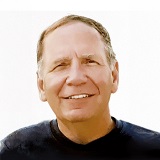
Rob is one of the founders of NOVA Hydromet, a company specializing in severe service applications for pressure hydrometallurgy worldwide, and currently serves as its director of research and development. Using an interdisciplinary approach based on first principles, Rob has helped resolve multi-million-dollar production issues at some of the world’s largest autoclave production sites and pioneered industry best practices in letdown analysis and design. He is passionate about solving complex problems, often using mathematical models that draw on various sciences and his experience in control theory from the aerospace and instrumentation industries. Rob has authored multiple patents, previously worked at Memorex, Textron, and Caldera Engineering, and holds bachelor’s and master’s degrees in mechanical engineering from Brigham Young University.

SC2: Lithium Battery Recycling: Essential Concepts, Industry Challenges, and Opportunities

Aleks Nikoloski, PhD, Professor, Centre for Water & Energy & Waste, Murdoch University
18:15

Lithium Battery Recycling: Essential Concepts, Industry Challenges, and Opportunities

Aleks Nikoloski, PhD, Professor, Centre for Water & Energy & Waste, Murdoch University

This streamlined course provides a comprehensive introduction to lithium-ion (Li-ion) battery recycling. It covers essential concepts and both current mechanical and chemical processes, as well as industry challenges and opportunities. Participants will learn about risk management in battery handling, safe collection and discharging procedures, pretreatment methods, physical separation, chemical processing of 'black mass,' and ways to recover valuable elements for reuse. The curriculum also explores the environmental and economic benefits of recycling to encourage sustainability. Designed for professionals and students alike, the course offers hands-on, practical knowledge and covers recent technological progress in Li-ion battery recycling, featuring solutions tailored for different battery types and needs. Guided by an experienced practitioner, attendees will gain core insights necessary for advancing clean energy initiatives and understanding the complexities and potential of the recycling industry.

INSTRUCTOR BIOGRAPHIES:

Aleks Nikoloski, PhD, Professor, Centre for Water & Energy & Waste, Murdoch University

Professor Aleks Nikoloski, with a PhD in Metallurgical Engineering from Murdoch University, has 28 years of experience in teaching, research, and as a process engineer in extractive metallurgy. He works with industry to develop new technologies for minerals and metals production, specialising in applied electrochemistry for hydrometallurgy and energy storage systems. His research focuses on sustainable technologies for treating various minerals and metals. Over the past decade, Professor Nikoloski's research has concentrated on advancing technology for the beneficiation and chemical processing of lithium-containing materials to produce lithium precursor chemicals for batteries. In addition to his teaching and research responsibilities, Professor Nikoloski is actively involved in multiple professional organisations and has an extensive publication record in peer-reviewed journals. He has also disseminated his findings at numerous international conferences, solidifying his standing as a leading expert in his field. His contributions to extractive metallurgy have been recognised with various awards and honours. Committed to mentoring future engineers and scientists, Professor Nikoloski fosters a collaborative and innovative research environment. He supervises PhD and master's students, guiding them through their research projects and assisting them in achieving their academic and professional goals. His work advances the scientific understanding of metallurgical processes and aims to address environmental challenges associated with the mining and metals industries. Through his research, he strives to develop sustainable solutions that minimise the environmental impact of mineral extraction and processing, contributing to a more sustainable future.

*活动内容有可能不事先告知作更动及调整。


Choose your language
Chinese
Japanese
Korean
English