
Cambridge Healthtech Institute的培训研讨会涵盖广泛的学术理论和背景,以及真实案例研究、遇到的问题和应用解决方案。每场培训研讨会都结合正式讲座与互动讨论及活动,以最大化学习体验。我们经验丰富的讲师将聚焦于与当前研究相关的内容,并为新手提供重要指导。
培训研讨会仅限面对面线下进行
为确保学习环境的一致性和专注性,
禁止在会议和培训研讨会之间随意走动。
Monday, 16 November 2026 08:30 - 17:00
TS1A: Introduction to Multispecific Antibodies: History, Engineering, and Applications
Topics to be covered:
- A brief history of bispecific antibodies: 60 years of progress with critical advances and key pioneers
- Bispecific applications and powerful mechanisms-of-action
- Engineering bispecific antibodies: 100 formats and counting
- Bispecific-specific considerations in preclinical development and regulatory landscape
- Developability, manufacturing, and analytical considerations
- Clinical experience, translation, and regulatory approval
- Current trends and future opportunities in regulating immune checkpoints, cell-based therapies, and personalised approaches
INSTRUCTOR BIOGRAPHY:
 G. Jonah Rainey, PhD, Associate Vice President, Eli Lilly and Company
TS2A: Everything You Ever Wanted to Know about Immunogenicity
This 1-day training seminar provides a practical, comprehensive overview of immunogenicity-the causes, how to assess an immunogenicity risk, and what to do if you observe immunogenicity during preclinical, clinical, and post-market approval. The seminar begins by detailing the science behind immunogenicity and the latest international guidance, followed by assay and bioanalytical assessment strategies for traditional and emerging biologics. Other topics include non-clinical models, the role of AI/ML, and reporting immunogenicity.
INSTRUCTOR BIOGRAPHIES:
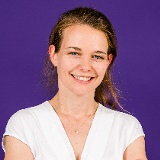 Chloé Ackaert, PhD, Senior Scientist, Immunogenicity, IQVIA Laboratories
 Timothy Hickling, PhD, Consultant, Quasor Ltd; CSO, Open Immune
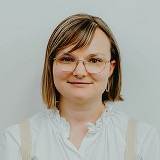 Aurelie Mazy, Scientist, IQVIA Laboratories
TS3A: Introduction to Machine Learning for Biologics Design
- Basics of machine learning and where it fits into drug discovery
- Modern homology modelling and structure prediction
- Predicting antibody affinity and specificity modulation
- Generative design in biologics: library design and language models
- Machine learning applications of T cell and B cell immunogenicity
- Methods and application of ML for chemical, folding, and solution stabilities
INSTRUCTOR BIOGRAPHY:
 Christopher R. Corbeil, PhD, Research Officer, Human Health Therapeutics, National Research Council Canada
TS4A: Protein Production 201: Applying End-to-End CEPA Workflow
Topics to be Covered:
Review of host expression systems and their application
- Cell free, bacterial, yeast, plant, insect, and mammalian host systems
- Which expression system should I use to express my protein?
- Can we generate a host expression decision tree to address complex modalities?
Implementing and optimising the CEPA workflow
- Aligning data and biology to optimise expression
- Addressing bottlenecks in harvesting/purification
- Analytical methodologies and their applications
- Establishing/Setting QC standards
Case Studies
- Difficult-to-express proteins
- Structural biology support
- Automation/Screening
- Scale-down/Scale-up
INSTRUCTOR BIOGRAPHIES:
 Richard Altman, MS, Field Application Scientist, Thomson Instrument Company
 Christopher Cooper, DPhil, Senior Lecturer in Biotechnology, University of Surrey
 Dominic Esposito, PhD, Senior Director, Protein Sciences, Septerna
Tuesday, 17 November 2026 08:30 - 18:35
TS7B: AI-Driven Design of Biologics: A Hands-on Guide to Using State-of-the-Art ML Protein Models
Participants are expected to have some prior exposure to computational modeling tools (e.g. Python, R, COOT, Rosetta, AutoDock Vina, etc.) but limited experience applying them to their projects. They should be comfortable using Jupyter notebooks and prepared to explore topics such as evaluating metrics, determining appropriate sampling sizes, and selecting key adjustable parameters. While this seminar does not cover ligand docking or protein-protein docking, it is well-suited for those interested in antibody modeling and, potentially, enzyme design language models.
Hands-on instructional content will be presented as Google Colab notebooks written in python. A basic understanding of general coding principles, such as typing, loops, functions, and classes, will be sufficient. It will not be required to write your own code from scratch, but a sufficient familiarity with python to understand and edit the provided notebooks will be essential to a meaningful experience.
Topics to be covered:
- Building practical experience with AI-based modelling of proteins
- A breakdown of input formats, command lines, and analysis of output
- Hands-on exercises using real-world scenarios in antibody structure prediction, developability pre-screening, immunogen solubilization, and de novo binder design
- Discussion of, and guidance on, questions like: how many models, in silico selection metrics and ranking, and how many to test in the lab
- Pipelining of protein design software and the critical use of an “oracle”
INSTRUCTOR BIOGRAPHY:
 David P. Nannemann, PhD, Vice President, Rosetta Commons Foundation
* 活动内容有可能不事先告知作更动及调整。